FRCA Notes


Prostaglandins and Cyclo-oxygenase


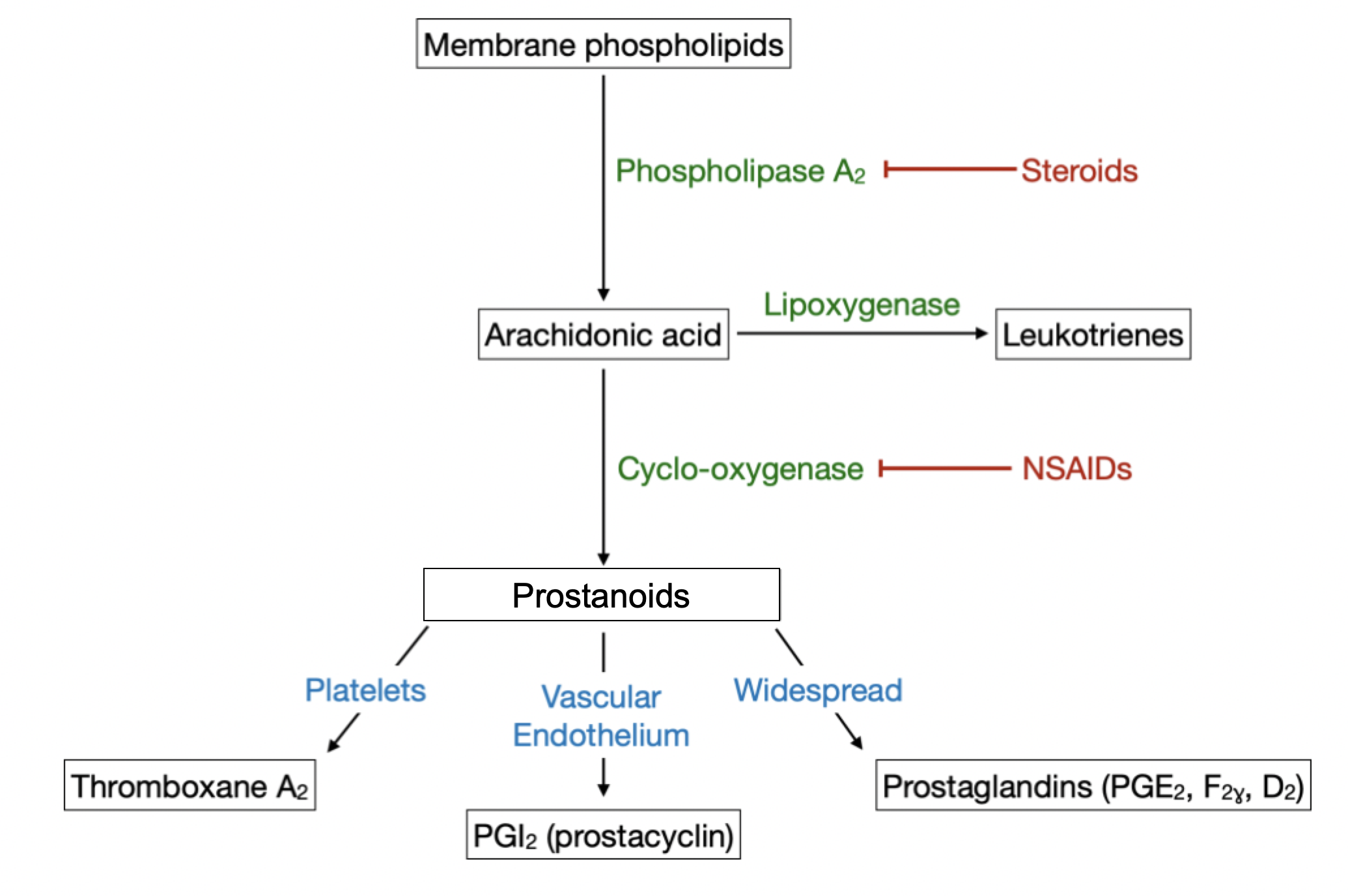
Arachidonic acid pathway

Thromboxane A2

  • Produced by platelets when exposed to:
    • Adenosine (ADP)
    • Collagen
    • Adrenaline

  • Promotes haemostasis via vasoconstriction and platelet aggregation
  • Low dose aspirin selectively inhibits platelet thromboxane production; effects last for the lifespan of the platelet as there is no nucleus

Endothelial prostacyclin (PGI2)

  • Promotes vasodilation
  • Inhibits platelet aggregation
  • Production is not affected by aspirin

Prostaglandins

  • PGE2
    • Increases gastric mucous secretion
    • Reduces gastric acid secretion
    • Causes renal afferent arteriolar vasodilation

  • PGF2⍺
    • Uterine contraction
    • Bronchoconstriction

  • Two main iso-enzymes, COX-1 and COX-2
  • The molecular difference between the two is a substitution of isoleucine for valine
    • This allows access to a hydrophobic side pocket, which acts as an alternative specific binding site for drugs on COX-2

COX-1

  • Constitutive form of the enzyme
  • Responsible for the production of prostaglandins that:
    • Control renal blood flow
    • Form the protective gastric mucosal layer
  • Mediates synthesis of thromboxane
  • Inhibition of COX-1 is responsible for side-effects such as GI upset and nephropathy

COX-2

  • Inducible form of the enzyme - produced is response to tissue damage and facilitates inflammatory response

  • Mediates prostacyclin (PGI2) production in the vascular endothelium
    • Inhibitors of COX-2 may therefore alter the thromboxane/prostacyclin balance
    • They tip the balance in favour of platelet aggregation, vasoconstriction and thrombo-embolism

  • Selectively inhibited by the '-coxibs' and preferentially inhibited by meloxicam

COX-3

  • Centrally-found COX-1 variant
  • Possibly the mechanism by which paracetamol reduces pain and pyrexia