- Presents as a clear solution of 200mg or 800mg in 5ml water, with sodium metabisulfite
- Used as an infusion in theatre and critical care environments for its vasoactive properties
- Particularly used in cardiac surgery and cardiac ICU
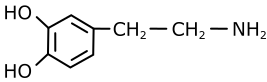
Dopamine
Dopamine
- Within certain cells of the brain and interneurones of autonomic ganglia, dopamine isn't converted to noradrenaline and is released as a neurotransmitter
Absorption
- Onset of action within 5mins
- 25% of administered dose is converted to noradrenaline
Metabolism
- MAO and COMT in the liver, kidneys and plasma
- Metabolites are the inactive compounds homovanillic acid (HVA) and 3,4-dihydroxyphenylacetic acid
Excretion
- Metabolites are excreted in the urine as sulphate/glucuronide conjugates
- Half-life 3mins
- Duration of 10 minutes
Respiratory
- Attenuates the response of the peripheral chemoreceptors in the carotid body to hypoxia
- Increased PVR
Cardiovascular
- It has effects on ɑ-adrenoreceptors, β-adrenoreceptors and D1 and D2 receptors
- Precise effects depen on the rate of infusion and on the patient
- Colloquially known as "no-hope-amine" because of its debatable efficacy
- Low dose: <10μg/kg/min - β1 effect predominates
- Increased contractility, HR, CO and coronary blood flow
- Stimulates the release of endogenous noradrenaline
- High dose: >10μg/kg/min - ɑ-effects tend to predominate
- Increased SVR and venous return
- Less arrhythmogenic than adrenaline
Neurological
- Dopamine modulates extrapyramidal movement
- Inhibits secretion of prolactin from the pituitary gland
- Cannot cross BBB (although DOPA can)
Renal
- Vasodilates mesenteric vessels via the action of D1 receptors therefore is supposed to maintain renal blood flow and be reno-protective
- Improvement in urine output may be entirely due to:
- Inhibition of proximal tubule Na+ reabsorption
- Improved cardiac output and renal perfusion pressure
Gastrointestinal
- Stimulates chemoreceptor trigger zone, causing nausea and vomiting
- Increased gastric transit time
Other
- Caution with MAO-Is