FRCA Notes


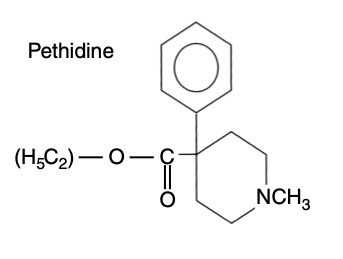
Pethidine


  • Pethidine is a synthetic phenylpiperidine derivative
Pethidine chemical structure

Presentation

  • Tablets
  • Solution containing between 10mg/ml and 50mg/ml for IV, SC or IM use
    • Typical dose 0.5-1.0mg/kg (i.e. usually 25-100mg)

Uses

  • Often used as a labour analgesic
    • It is highly lipid soluble therefore significant amounts cross the placenta and reach the foetus
    • Its less lipid soluble metabolite norpethidine accumulates in the foetus
    • Foetal levels peak 4hrs post-maternal IM dose
    • There is reduced foetal clearance and therefore a 3x increased half life of both pethidine and norpethidine

Absorption

  • pKa 8.7
  • Therefore only 5% unionised at physiological pH
  • Relative lipid solubility of 30x morphine, therefore faster onset of action
  • Oral bioavailability 50%

Distribution

  • Volume of distribution 4L/kg
  • 60% protein bound
  • More lipid soluble than morphine, so crosses BBB rapidly

Metabolism & excretion

  • Hepatic metabolism via:
    • Ester hydrolysis to pethidinic acid
    • N-demethylation to norpethidine (active metabolite with 50% analgesic activity of pethidine)

  • Elimination half life 210mins
    • Norpethidine has a much longer half life (14-24hrs)
    • Accumulates in renal failure and may cause hallucinations and grand-mal seizures
    • Norpethidine is not reversed by naloxone

  • Norpethidine, pethidinic acid and (small amounts of unchanged) pethidine are excreted in the urine

  • Shares the common opioid effects with morphine

Neurological

  • Has some LA-like actions

Anticholinergic properties

  • Less marked meiosis than morphine and possibly a degree of mydriasis
  • Dry mouth
  • Tachycardia

Gastrointestinal

  • Less biliary tract spasm than morphine although clinical significance of this unclear

Interactions

  • Interaction with MAO-I's (e.g. tranycypromine) causes central serotonergic hyperactivity
    • Pethidine blocks serotonin re-uptake
    • MAO-I's block/reduce amine breakdown
    • The combined effect can cause hyperpyrexia, labile circulation, convulsions and coma