FRCA Notes


Vecuronium


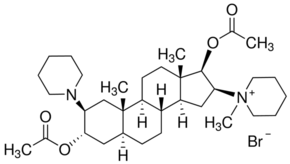
  • A monoquaternary analogue of pancuronium
  • Differs by a single methyl group
Vecuronium chemical structure

Presentation

  • Unstable in solution
  • Presents as 10mg freeze-dried powder in mannitol/NaOH
  • Dissolved in 5ml water to create a 2mg/ml solution

Dosing

  • At a dose of 0.1mg/kg creates intubating conditions in 90-120s
  • Provides intermediate duration of paralysis - approximately 40mins

Absorption and distribution

  • More lipid soluble than pancuronium as it only has one charged ammonium group
  • Therefore while a similar proportion is metabolised in the liver, more vecuronium is excreted in the bile
  • May accumulate if administered via infusion

Metabolism and excretion

  • Undergoes hepatic de-acetylation by CYP3A4 subfamily enzymes to:
    • 3-hydroxy-vecuronium - has significant muscle relaxant properties but has a very short half life so is inconsequential in normal renal function
    • 17-hydroxy-vecuronium
    • 3,17-dihydroxy-vecuronium

  • Described as a 'clean' drug with no cardiovascular effects or histamine release
  • Can cause critical illness myopathy if used with steroids